

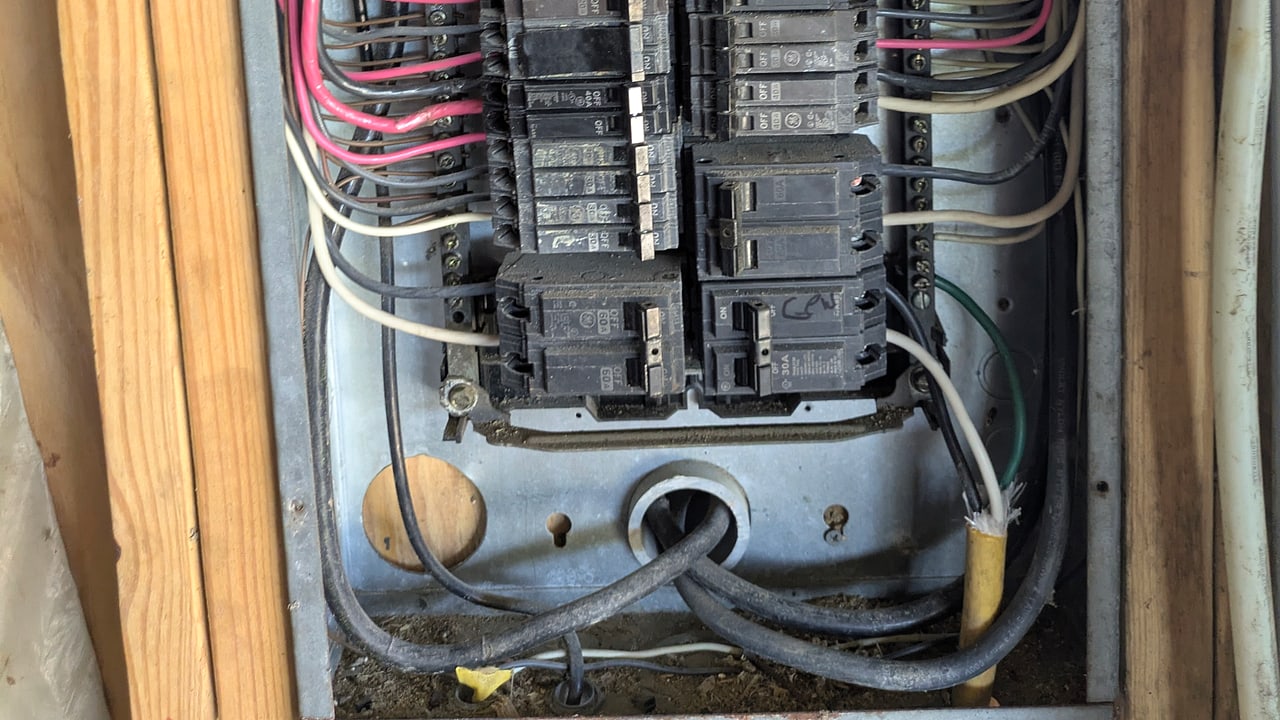
When you walk through a potential new home, you check the countertops, the flooring, and the curb appeal. You might even peek into the electrical panel to see if the labels are neat. But to the naked eye, a house fire looks exactly like a safe home—until it doesn't.
At Secured Inspections, we don't just "look" at houses. we analyze them. Today, we’re pulling back the curtain on one of the most common invisible threats we find in the Houston, Brazoria, and Galveston markets: Overheating Breakers.
The Invisible Threat
An electrical breaker is designed to "trip" and shut off power when a circuit is overloaded. However, loose wiring, internal corrosion, or a failing breaker can cause a "high-resistance" connection. This generates intense heat without necessarily tripping the breaker.
The result? The plastic casing begins to melt, wire insulation degrades, and eventually, the surrounding combustible materials ignite.
Why Standard Inspections Fall Short
A traditional home inspection involves a visual check. An inspector looks for charred marks or the smell of ozone. The problem? By the time you can see or smell the damage, the fire risk is imminent.
Our "Tech Tuesday" protocols change the game. Using industrial-grade Infrared (Thermal) Imaging, we see the heat signatures that are invisible to the human eye.
The Visual Reality: A clean, gray electrical panel.
The Secured Reality: A glowing "hot spot" indicating a breaker reaching temperatures over 150°F.
Coastal Factors: The Houston & Galveston Variable
In our local service area, humidity and salt air (especially in Galveston and Brazoria) accelerate the oxidation of copper and aluminum wiring. This oxidation increases resistance, which in turn increases heat. A panel that was safe five years ago may be a hazard today due to our unique Texas climate.
Our Safety-First Approach
We believe in Technical Mastery and Client Empowerment. If we find an overheating breaker, we don’t just mark it "deficient." We provide you with the thermal imagery as data-driven proof, allowing you to:
Negotiate Repairs: Get the seller to bring in a licensed electrician before you close.
Ensure Safety: Move your family in knowing the "bones" of the home are secure.
Prevent Loss: Avoid the devastating cost and trauma of an electrical fire.
Your home is likely your largest investment. Don't leave its safety to a "visual guess." Insist on an inspection team that utilizes thermal imaging as a standard, not an upgrade.
The Thermodynamics of Electrical Resistance & Fire Ignition
Electrical fires rarely begin with an explosive blast; they start with slow, insidious thermodynamic degradation. According to Joule's First Law (Heat = Current² × Resistance × Time), whenever electrical current encounters localized resistance—such as a loose terminal screw, corroded bus bar contact, or oxidized wire splice—it generates intense heat. Over months, this continuous heating oxidizes metal contacts, breaks down wire insulation, and carbonizes plastic breaker housings, ultimately reaching ignition temperatures exceeding 800°F.
Why Visual Inspection Fails to Detect Thermal Runaway
A circuit breaker operating at a dangerous 175°F looks completely normal to the naked eye. The plastic casing has not yet melted, and the breaker handle remains in the 'ON' position. Standard home inspections that do not include infrared imaging cannot detect this imminent fire hazard. Operating circuit breakers under operational load—with air conditioners, ovens, and dryers running—is essential to revealing latent thermal anomalies.
NETA Maintenance Testing Standards & Delta-T Classifications
Secured Inspections interprets thermal thermograms using InterNational Electrical Testing Association (NETA) standards. By comparing the temperature of an overheating component to an adjacent similarly loaded component (the Delta-T differential), we classify defects:
- Delta-T 1°C to 10°C (Minor): Possible deficiency; monitor and re-evaluate under heavy loading.
- Delta-T 11°C to 20°C (Intermediate): Probable deficiency; repair at earliest convenience to prevent conductor degradation.
- Delta-T 21°C to 40°C (Serious): High deficiency; immediate repair required by a licensed master electrician.
- Delta-T > 40°C (Critical): Extreme safety hazard; immediate disconnection and emergency replacement of overcurrent device.
Need an Objective Forensic Property Inspection?
Residential Pre-Purchase, ASTM E2018 Commercial PCAs, Termite WDI, Sewer Camera Scopes, and FLIR Thermal Infrared diagnostics across Greater Houston, Galveston, and Brazoria.
