

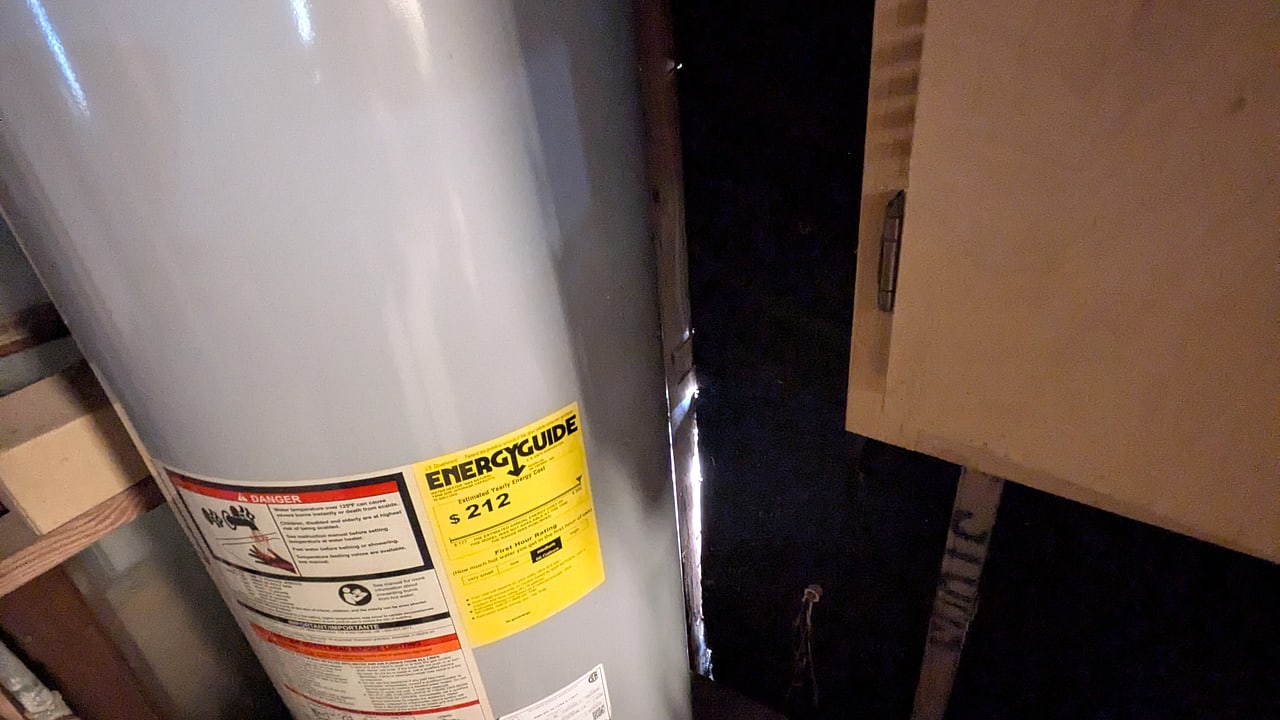
In every residential home, the domestic water heater is one of the most heavily utilized appliances. Whether powered by natural gas, propane, or electricity, a standard 40- to 80-gallon storage tank stores water under continuous municipal pressure (typically 40 to 80 psi). Because water expands as it is heated, water heaters incorporate an essential mechanical emergency safety valve: the Temperature and Pressure Relief (TPR) valve.
1. The Thermodynamics of Water Heater Explosions
Under standard atmospheric pressure, water changes phase from liquid to steam at 212°F (100°C), expanding to 1,600 times its original liquid volume. However, inside a sealed, pressurized water heater tank, water can be superheated to 250°F to 300°F while remaining liquid. If an electrical thermostat sticks closed or a gas control valve fails to shut off, the internal temperature continues to climb.
If the tank structurally fails under extreme pressure, the sudden drop to atmospheric pressure causes the entire volume of superheated liquid water to instantaneously flash into steam. The resulting explosive force has launched 50-gallon water heaters hundreds of feet into the air, blowing through multiple floors and roof decks.
2. The Dual-Function Temperature & Pressure Relief (TPR) Valve
Under ASME Boiler and Pressure Vessel Code and IRC Section P2804, every storage water heater must feature an approved TPR valve calibrated to relieve pressure under two distinct conditions:
- Temperature Trip: A thermal wax probe extending into the top 6 inches of the tank automatically opens the valve when water temperature reaches 210°F.
- Pressure Trip: A heavy spring-loaded internal seat opens automatically when internal pressure exceeds 150 psi.
3. Strict IRC P2804.6.1 Discharge Piping Rules
Opening the TPR valve is only half the battle; superheated water and steam escaping under high pressure must be discharged safely without scalding occupants. Common fatal deficiencies audited by Secured Inspections include:
- Capped or Plugged Discharge Line: A homeowner or handyman capping a dripping TPR valve to stop a leak—turning the water heater into an unvented bomb.
- Unapproved Piping Materials: Using non-heat-rated PVC, thin vinyl garden hoses, or PEX without proper pressure/temperature ratings. (Standard white Schedule 40 PVC is rated for only 140°F and softens/bursts under 210°F discharge water).
- Improper Termination Clearances: The discharge pipe must drain by gravity (no upward loops or traps where water can pool and freeze), terminate between 6 and 24 inches above the ground outside, and have no threads on the discharge end (preventing anyone from attaching a garden hose or cap).
4. Residential Building Science & TREC Standards of Practice
A certified residential home inspection is a rigorous evaluation of interconnected building systems. Under the Texas Real Estate Commission (TREC) Standards of Practice (§§535.227–535.233), Secured Inspections executes a systematic forensic protocol across all major home components:
- Structural Envelope & Elevation Survey: Auditing foundation slabs, crawlspace framing, exterior masonry weep screeds, roof trusses, and attic ventilation using digital altimeters and thermal imaging to detect active movement and moisture intrusion.
- Electrical Life-Safety Diagnostics: Verifying arc-fault circuit interrupter (AFCI) and ground-fault circuit interrupter (GFCI) trip response, main service grounding electrode bonding, panelboard temperature gradients, and branch wiring integrity.
- Mechanical HVAC & Indoor Air Quality: Testing sensible and latent cooling split differentials, condensate drainage safety float switches, combustion air supplies, gas furnace heat exchangers, and ductwork insulation R-values.
- Plumbing Supply & Drainage Pressure Testing: Checking static water pressure, thermal expansion tanks, water heater temperature-pressure relief (TPR) discharge lines, fixture flow, and waste drainage performance.
By delivering comprehensive, clear, and data-driven inspection reports, our forensic team ensures prospective Texas homeowners possess complete clarity regarding property condition before removing contractual contingencies.
Need an Objective Forensic Property Inspection?
Residential Pre-Purchase, ASTM E2018 Commercial PCAs, Termite WDI, Sewer Camera Scopes, and FLIR Thermal Infrared diagnostics across Greater Houston, Galveston, and Brazoria.
