

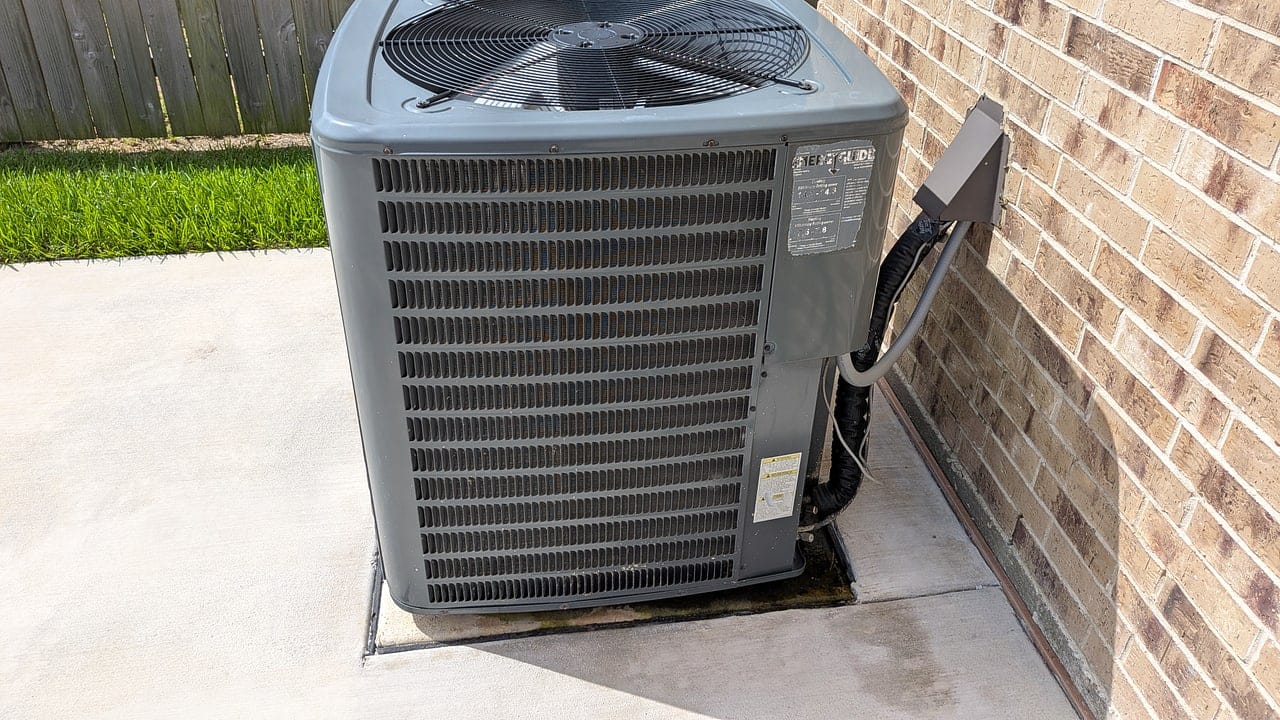
For Texas homeowners and prospective property buyers, understanding residential heating, ventilation, and air conditioning (HVAC) standards is crucial. In recent years, the Department of Energy (DOE) implemented the SEER2 (Seasonal Energy Efficiency Ratio 2) testing standards, while the Environmental Protection Agency (EPA) enacted strict manufacturing phaseouts of high-Global Warming Potential (GWP) hydrofluorocarbon refrigerants. These changes directly impact replacement availability, equipment costs, and electrical infrastructure.
1. Understanding the SEER2 Metric in the Texas Southern Region
The DOE divides the United States into three distinct climate regions. Texas falls under the Southeast Region, where high cooling degree days mandate elevated efficiency baselines. Under the updated M1 testing procedure (which simulates real-world external static duct pressure of 0.5 inches water column, up from 0.1 to 0.2 in legacy tests), split-system central air conditioners in Texas must achieve a minimum rating of 14.3 SEER2 (equivalent to approximately 15.0 SEER under legacy ratings).
2. The 2025/2026 A2L Refrigerant Transition: R-454B and R-32
Beginning January 1, 2025, EPA regulations banned the manufacture of residential split-system air conditioners utilizing R-410A (which possesses an astronomical GWP of 2,088). New residential HVAC systems utilize mildly flammable "A2L" classified refrigerants—primarily R-454B (Opteon XL41, GWP 466) and R-32 (GWP 675).
Because A2L refrigerants are mildly flammable, modern indoor air handlers feature factory-installed Refrigerant Detection Sensors (RDS). If a sensor detects a coil leak, it automatically de-energizes the outdoor compressor, opens safety shutoff valves, and operates the continuous indoor blower fan to dilute refrigerant concentrations below the Lower Flammability Limit (LFL).
3. What Home Inspectors Evaluate on HVAC Inspections
Under TREC Standard of Practice §535.230, Secured Inspections tests HVAC systems for proper supply/return temperature differential (normal range: 15°F to 22°F), audits secondary emergency drain pan float switches, checks line set insulation integrity, and examines indoor plenum seals using FLIR® infrared cameras to prevent conditioned air loss into scorching 135°F Texas attics.
4. Residential Building Science & TREC Standards of Practice
A certified residential home inspection is a rigorous evaluation of interconnected building systems. Under the Texas Real Estate Commission (TREC) Standards of Practice (§§535.227–535.233), Secured Inspections executes a systematic forensic protocol across all major home components:
- Structural Envelope & Elevation Survey: Auditing foundation slabs, crawlspace framing, exterior masonry weep screeds, roof trusses, and attic ventilation using digital altimeters and thermal imaging to detect active movement and moisture intrusion.
- Electrical Life-Safety Diagnostics: Verifying arc-fault circuit interrupter (AFCI) and ground-fault circuit interrupter (GFCI) trip response, main service grounding electrode bonding, panelboard temperature gradients, and branch wiring integrity.
- Mechanical HVAC & Indoor Air Quality: Testing sensible and latent cooling split differentials, condensate drainage safety float switches, combustion air supplies, gas furnace heat exchangers, and ductwork insulation R-values.
- Plumbing Supply & Drainage Pressure Testing: Checking static water pressure, thermal expansion tanks, water heater temperature-pressure relief (TPR) discharge lines, fixture flow, and waste drainage performance.
By delivering comprehensive, clear, and data-driven inspection reports, our forensic team ensures prospective Texas homeowners possess complete clarity regarding property condition before removing contractual contingencies.
Need an Objective Forensic Property Inspection?
Residential Pre-Purchase, ASTM E2018 Commercial PCAs, Termite WDI, Sewer Camera Scopes, and FLIR Thermal Infrared diagnostics across Greater Houston, Galveston, and Brazoria.
