
In residential construction across Texas, natural gas and propane furnaces are overwhelmingly installed in unconditioned attic spaces. While these systems provide fast, reliable heating during winter cold snaps, gas furnaces are combustion appliances that require rigorous forensic evaluation. The heat exchanger—the steel barrier separating toxic combustion flue gases from the conditioned breathable air inside your home—is the single most safety-critical component.
1. How Heat Exchangers Crack: Thermal Cycling and Humidity
A gas furnace heat exchanger consists of multi-cell stamped aluminized steel or tubular stainless steel chambers. Inside the tubes, natural gas burns at temperatures exceeding 1,200°F. Outside the tubes, the central HVAC blower pushes household air across the hot metal to heat the home.
In Texas, furnaces endure brutal environmental conditions. During hot summer months, high attic humidity condenses on dormant steel cells. When winter heating cycles initiate, rapid metal expansion and contraction (thermal cycling) concentrates stress along stamped seams, factory crimps, and burner orifices. Over 12 to 18 years, metal fatigue produces stress cracks that expand with every heating cycle.
2. Carbon Monoxide (CO) Generation and Health Hazards
Carbon monoxide is a colorless, odorless, tasteless toxic gas. When a heat exchanger cracks, the pressure differential created by the HVAC blower can force flue gases into the supply ductwork. Chronic low-level CO exposure (10 to 30 ppm) causes headaches, fatigue, nausea, and dizziness; acute exposure (>100 ppm) leads to disorientation, unconsciousness, and death.
3. Forensic Inspection Techniques for Attic Furnaces
Under TREC §535.230, Secured Inspections tests gas furnaces using advanced diagnostic procedures:
- Blower Interference Test: Observing the burner flame pattern the exact second the circulating blower engages. Any flame disturbance, fluttering, or flame rollout indicates air passing through breached heat exchanger cells.
- Combustion Analysis & Ambient CO Sniffing: Deploying calibrated electronic carbon monoxide analyzers in supply registers to verify zero parts-per-million CO readings during steady-state operation.
- Flue Vent Clearance and Draft: Checking B-vent double-wall metal chimney pipes for proper 1-inch clearance to combustible wood framing, continuous upward slope (1/4" per foot), and draft hood spillage.
4. Residential Building Science & TREC Standards of Practice
A certified residential home inspection is a rigorous evaluation of interconnected building systems. Under the Texas Real Estate Commission (TREC) Standards of Practice (§§535.227–535.233), Secured Inspections executes a systematic forensic protocol across all major home components:
- Structural Envelope & Elevation Survey: Auditing foundation slabs, crawlspace framing, exterior masonry weep screeds, roof trusses, and attic ventilation using digital altimeters and thermal imaging to detect active movement and moisture intrusion.
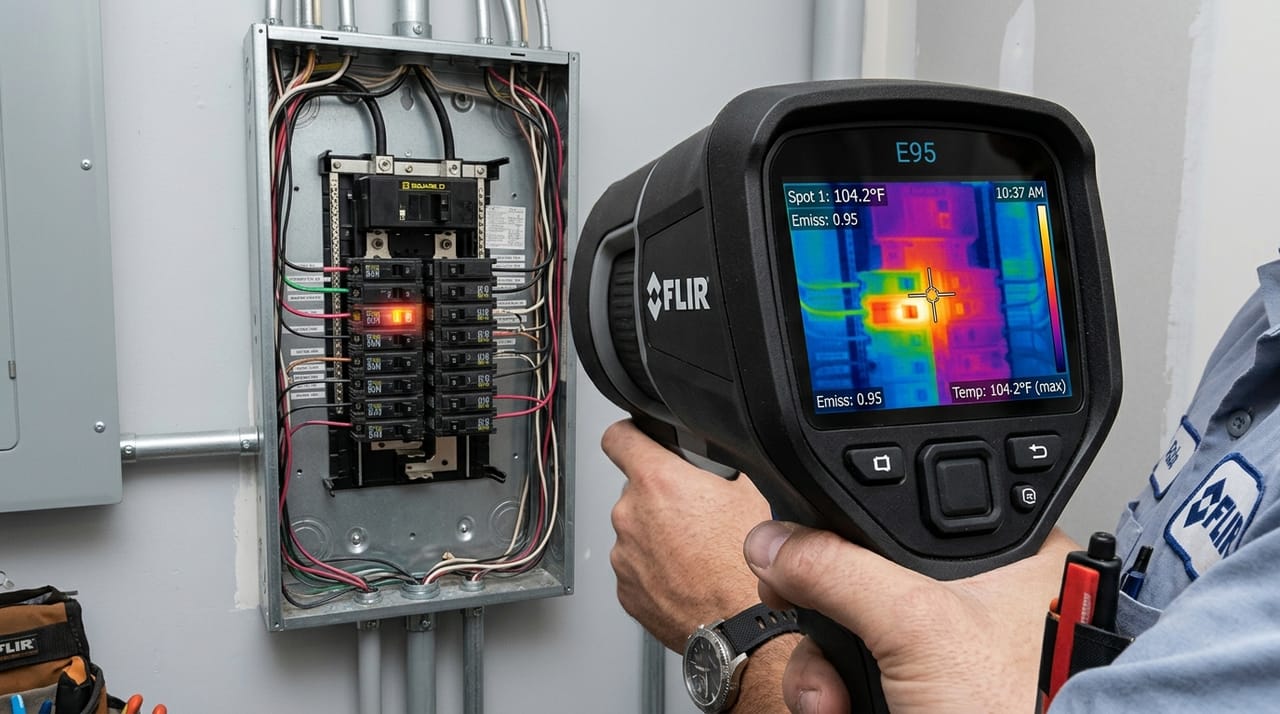
- Electrical Life-Safety Diagnostics: Verifying arc-fault circuit interrupter (AFCI) and ground-fault circuit interrupter (GFCI) trip response, main service grounding electrode bonding, panelboard temperature gradients, and branch wiring integrity.
- Mechanical HVAC & Indoor Air Quality: Testing sensible and latent cooling split differentials, condensate drainage safety float switches, combustion air supplies, gas furnace heat exchangers, and ductwork insulation R-values.
- Plumbing Supply & Drainage Pressure Testing: Checking static water pressure, thermal expansion tanks, water heater temperature-pressure relief (TPR) discharge lines, fixture flow, and waste drainage performance.
By delivering comprehensive, clear, and data-driven inspection reports, our forensic team ensures prospective Texas homeowners possess complete clarity regarding property condition before removing contractual contingencies.
Need an Objective Forensic Property Inspection?
Residential Pre-Purchase, ASTM E2018 Commercial PCAs, Termite WDI, Sewer Camera Scopes, and FLIR Thermal Infrared diagnostics across Greater Houston, Galveston, and Brazoria.
