
When Category 4 and 5 hurricanes strike the Texas Gulf Coast—such as Hurricane Ike in 2008 or Hurricane Beryl in 2024—the primary structural failure mode is wind uplift. Aerodynamic flow over pitched and gable roofs generates powerful negative suction pressures, lifting roof assemblies off wall plates. In coastal building science, the single most critical structural concept is the Continuous Load Path.
1. Understanding the Continuous Load Path
A continuous load path is an unbroken chain of engineered structural connectors that transfers wind uplift and lateral shear forces from the roof shingles down through the building frame into the foundation concrete:
- Roof sheathing nailed with ring-shank nails into roof rafters/trusses.
- Rafters fastened to double top wall plates via hurricane tie clips.
- Top wall plates connected through studs to bottom sill plates via continuous plywood/OSB structural sheathing.
- Bottom sill plates anchored to concrete foundation beams with 1/2-inch steel anchor bolts every 4 to 6 feet.
2. The Failure of Toe-Nailing
Prior to the adoption of modern coastal building codes (such as the 2003 International Residential Code with Texas Windstorm Amendments), carpenters fastened rafters to top plates using three 16-penny nails driven at an angle ("toe-nailing"). Under high wind uplift, toe-nails pull out with minimal resistance, causing complete roof separation.
3. What Home Inspectors Look for in the Attic
During attic inspections in coastal zones, Secured Inspections audits:
- Hurricane Clip Model & Placement: Confirming heavy-gauge steel clips (e.g., Simpson Strong-Tie H2.5A, H10A, or MTS) installed on every rafter connection, not just every other rafter.
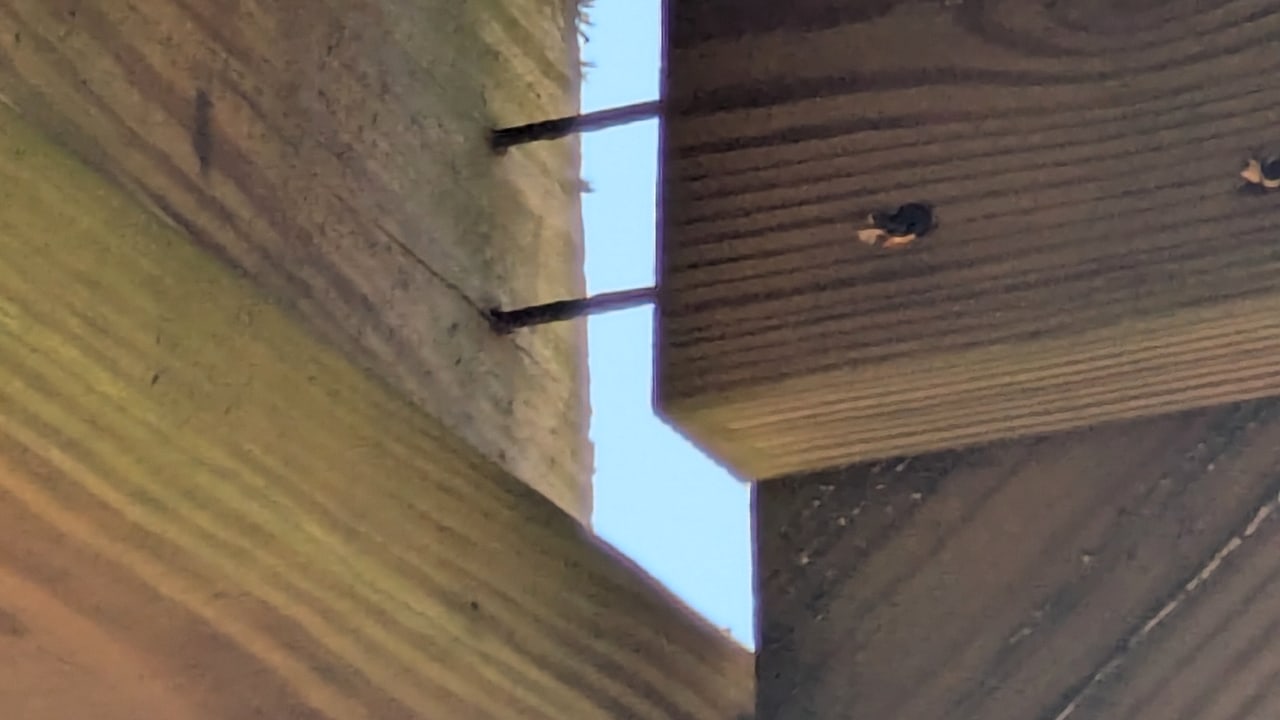
- Correct Fastener Verification: Checking that clips are secured with 1-1/2" or 2-1/2" hot-dip galvanized structural joist hanger nails. Utilizing smooth finish nails, deck screws, or missing nail holes severely invalidates wind load ratings.
- Corrosion on Connectors: In coastal salt fog zones, standard electro-galvanized connectors corrode into rust flaking within 10 years. Z-MAX or 316 stainless steel connectors are required for coastal longevity.
4. Coastal Building Science & Hurricane Hardening Standards
Properties built along the Texas Gulf Coast face distinct environmental stressors that inland structures rarely encounter. Preserving building longevity and insurance eligibility requires rigorous adherence to coastal building science principles:
- TDI Catastrophe Area Compliance: Verifying continuous structural load paths from roof rafters through wall framing down into foundation pilings in accordance with Texas Department of Insurance (TDI) windstorm building codes.
- Marine Atmospheric Corrosion Protection: Auditing exterior mechanical disconnects, HVAC condenser coils, and structural fasteners for hot-dip galvanized or 316 stainless steel coatings to resist aggressive sodium chloride salt fog corrosion.
- Psychrometric Moisture Management: Evaluating building envelope air-tightness, vapor retarder placement, and dedicated dehumidification systems to prevent hot humid outdoor air from condensing against air-conditioned interior surfaces.
- Storm Surge and Hydrostatic Relief: Ensuring ground-level enclosures below the Base Flood Elevation (BFE) incorporate engineered hydrostatic flood vents and breakaway wall assemblies to protect primary structural supports during extreme storm surge events.
Understanding these localized Gulf Coast building dynamics empowers property owners to make informed purchasing decisions, lower annual flood and windstorm insurance premiums, and protect against catastrophic storm losses.
Need an Objective Forensic Property Inspection?
Residential Pre-Purchase, ASTM E2018 Commercial PCAs, Termite WDI, Sewer Camera Scopes, and FLIR Thermal Infrared diagnostics across Greater Houston, Galveston, and Brazoria.
