
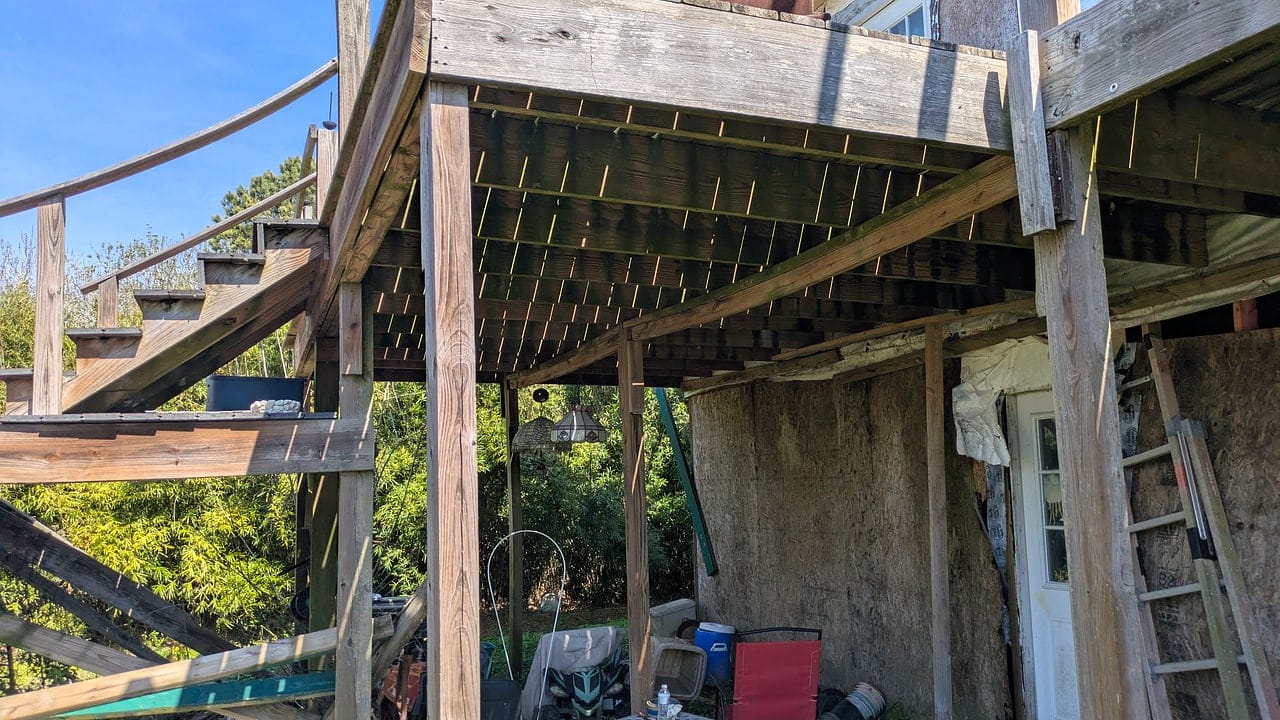
Throughout the historic districts of Galveston, Houston's Heights, and the coastal communities of Brazoria County, pier-and-beam foundations are an iconic building style. Elevating living spaces above damp soil provides flood resistance and easy plumbing access. However, managing the thermal and psychrometric environment beneath these structures in the sub-tropical Texas climate has sparked a major evolution in building science.
1. The Flaw of Traditional Crawlspace Ventilation
Historical building codes mandated open foundation vents (1 square foot of vent area per 150 square feet of crawlspace). While this logic functioned in arid western climates, it fails completely in the hot, humid Southeast Texas summer:
During July in Galveston, outdoor ambient air registers 92°F with 80% relative humidity (dew point ~85°F). When this outdoor air flows through foundation vents into the shaded crawlspace, it encounters the underside of the subfloor, which is chilled to 68°F by interior air conditioning. Because the subfloor temperature is far below the dew point of the outdoor air, moisture immediately condenses on wooden floor joists, subfloor plywood, and fiberglass insulation batts.
2. The Destructive Cycle of Wet Crawlspaces
This chronic summer condensation triggers severe building defects:
- Fungal Wood Rot (Serpula lacrymans & Coniophora): Wood moisture content (WMC) climbing above 20% fuels wood-decay fungi that break down lignin and cellulose, turning floor joists spongy and brittle.
- Fiberglass Insulation Batts Falling: Suspended fiberglass batts absorb condensation like a heavy sponge, pulling away from the subfloor and trapping moisture against wood.
- Indoor Air Quality & The Stack Effect: Under the natural "stack effect," 40% to 50% of the air inside the first floor of a pier-and-beam home is drawn directly up from the crawlspace through floor penetrations, carrying musty odors and fungal spores into bedrooms.
3. The Solution: Sealed Encapsulation & Dehumidification
Modern building science (IRC Section R408.3) endorses complete crawlspace encapsulation: sealing foundation wall vents, covering 100% of the ground with a 20-mil reinforced vapor barrier taped up piers, insulating perimeter stem walls, and installing an automatic low-temperature crawlspace dehumidifier draining outside to maintain relative humidity below 55%.
4. Coastal Building Science & Hurricane Hardening Standards
Properties built along the Texas Gulf Coast face distinct environmental stressors that inland structures rarely encounter. Preserving building longevity and insurance eligibility requires rigorous adherence to coastal building science principles:
- TDI Catastrophe Area Compliance: Verifying continuous structural load paths from roof rafters through wall framing down into foundation pilings in accordance with Texas Department of Insurance (TDI) windstorm building codes.
- Marine Atmospheric Corrosion Protection: Auditing exterior mechanical disconnects, HVAC condenser coils, and structural fasteners for hot-dip galvanized or 316 stainless steel coatings to resist aggressive sodium chloride salt fog corrosion.
- Psychrometric Moisture Management: Evaluating building envelope air-tightness, vapor retarder placement, and dedicated dehumidification systems to prevent hot humid outdoor air from condensing against air-conditioned interior surfaces.
- Storm Surge and Hydrostatic Relief: Ensuring ground-level enclosures below the Base Flood Elevation (BFE) incorporate engineered hydrostatic flood vents and breakaway wall assemblies to protect primary structural supports during extreme storm surge events.
Understanding these localized Gulf Coast building dynamics empowers property owners to make informed purchasing decisions, lower annual flood and windstorm insurance premiums, and protect against catastrophic storm losses.
Need an Objective Forensic Property Inspection?
Residential Pre-Purchase, ASTM E2018 Commercial PCAs, Termite WDI, Sewer Camera Scopes, and FLIR Thermal Infrared diagnostics across Greater Houston, Galveston, and Brazoria.
