
If you are eyeing a home built between the mid-1960s and the late 1970s, you are likely to encounter a specific technical detail that often sends a ripple of anxiety through the closing process: Aluminum Wiring.
At Secured Inspections, our job is to replace "buyer’s anxiety" with "investor’s data." Is aluminum wiring a dealbreaker? In its raw state, it presents documented risks. However, with the right technical mastery and modern mitigation, it doesn't have to be the end of your contract.
The Technical Reality: Why the Concern?
Between 1965 and 1973, a spike in copper prices led builders to use aluminum for branch circuit wiring. While aluminum is an excellent conductor, it possesses different physical properties than copper that, if ignored, can lead to fire hazards.
- Thermal Expansion: Aluminum expands and contracts more than copper when electricity flows through it. This "creeping" can cause connections at outlets and switches to loosen over time.
- Oxidation: When exposed to air, aluminum develops an oxide film. Unlike copper oxide, aluminum oxide is poorly conductive, creating resistance and, subsequently, heat.
- Glavanic Corrosion: Mixing aluminum wire with standard copper-only rated devices (outlets/switches) causes a chemical reaction that degrades the connection.
The Secured Inspections Checklist: What We Look For
During our rigorous diagnostic process across Houston and the Gulf Coast, our inspectors don't just "spot" aluminum; we evaluate the integrity of the system.
FeatureRisk LevelMitigation StrategyLoose TerminationsHighSpecialized torque testing and thermal imaging.CO/ALR DevicesModerateVerification of devices specifically rated for aluminum.Incorrect Wire NutsHighIdentifying "pigtailing" done with improper connectors.Is It a Dealbreaker?
The short answer: No, provided you factor in the cost of professional remediation.
Modern electrical standards provide two CPSC-approved methods to make these homes safe without a full "down-to-the-studs" rewire:
- Copalum Compression: A specialized high-pressure crimping tool that permanently bonds a copper "pigtail" to the aluminum wire.
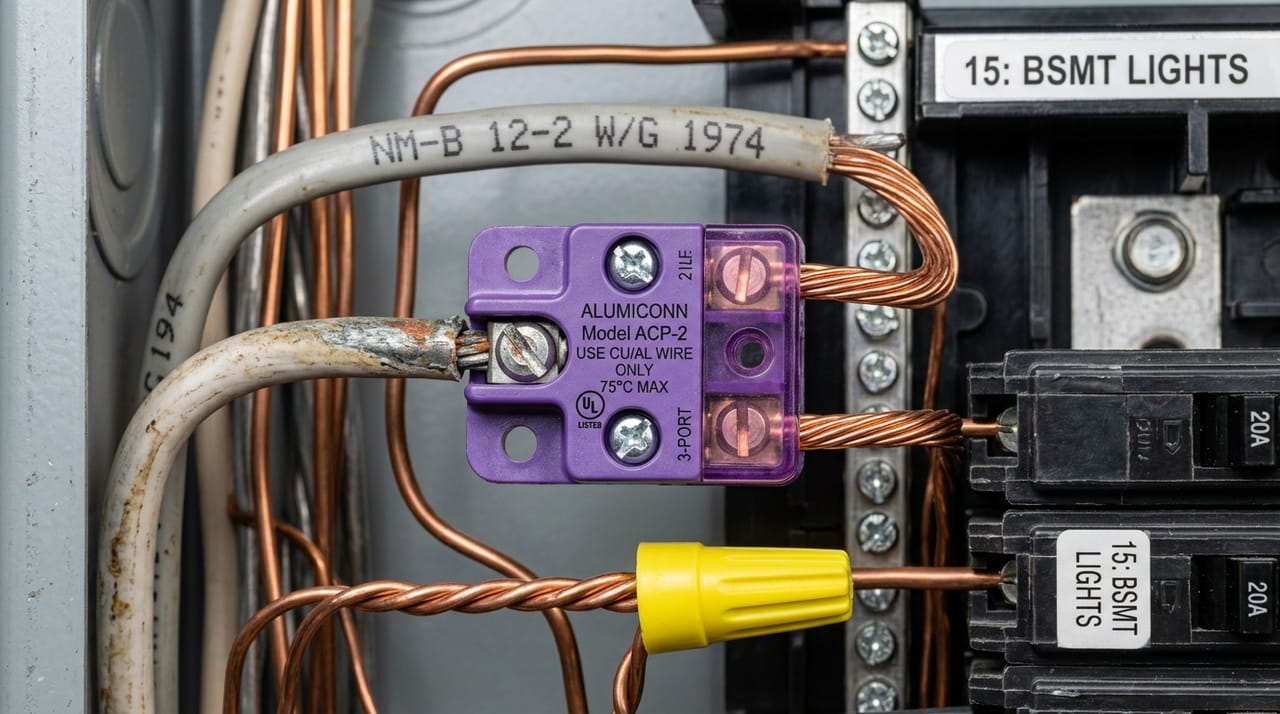
- AlumiConn Connectors: A lug-style mechanical connector that uses internal ports to separate the metals and prevent oxidation.
CMO’S NOTE: From a brand perspective, we advise our clients that "Information is Security." Knowing a home has aluminum wiring allows you to negotiate the repair costs into your closing credits. It isn't a reason to walk away; it’s a reason to get a Secured Inspection.
The Metallurgical Vulnerability of Single-Strand Aluminum
Between 1965 and 1973, copper shortages during the Vietnam War led builders across Texas and the United States to install single-strand aluminum branch wiring in residential construction. While multi-strand aluminum remains safe for heavy-duty service entrance cables, single-strand branch wiring in 15- and 20-amp circuits presents inherent metallurgical risks:
- Higher Thermal Expansion Coefficient: Aluminum expands nearly 40% more than copper when carrying electrical current. This continuous expansion and contraction loosens screw terminals over time (a phenomenon known as "creep").
- Galvanic Oxidation: When exposed to air, aluminum develops an aluminum oxide surface film. Unlike copper oxide, aluminum oxide is a severe electrical insulator, creating high contact resistance and localized overheating.
- Ductility & Fatigue: Aluminum is significantly more brittle than copper. Nicking the wire during stripping causes hidden stress fractures that overheat under load.
Consumer Product Safety Commission (CPSC) Approved Remediation
The presence of aluminum wiring does not require abandoning the purchase, but it demands proper, certified remediation. The CPSC recognizes three permanent repair methods:
- COPALUM Crimp Connections: A specialized high-pressure cold-weld crimp using factory-calibrated tools to bond a short copper pigtail to the aluminum conductor.
- AlumiConn Miniature Lug Connectors: Mechanical screw-lug connectors that separate copper and aluminum conductors in individual ports coated with anti-oxidant silicone sealant.
- Complete Whole-Home Copper Rewire: The gold standard solution, completely replacing vintage Romex cables with modern copper wiring.
Texas Insurance Underwriting & Thermal Imaging Protocols
Most Texas property insurance carriers will outright reject coverage or impose heavy surcharges on homes with un-remediated aluminum wiring. Secured Inspections combines visual deadfront panel audits with calibrated FLIR infrared thermal imaging to scan all accessible junction boxes, switches, and receptacles for high-resistance thermal hotspots.
Need an Objective Forensic Property Inspection?
Residential Pre-Purchase, ASTM E2018 Commercial PCAs, Termite WDI, Sewer Camera Scopes, and FLIR Thermal Infrared diagnostics across Greater Houston, Galveston, and Brazoria.
